Can waveform residuals in gravitational-wave data survive detector noise?

Selected topic

Can waveform residuals in gravitational-wave data survive detector noise?

This topic uses LIGO Virgo noise-subtraction work to test whether waveform residuals remain after detector noise is removed. The next pass should compare the residual claim against conservative data-quality limits.

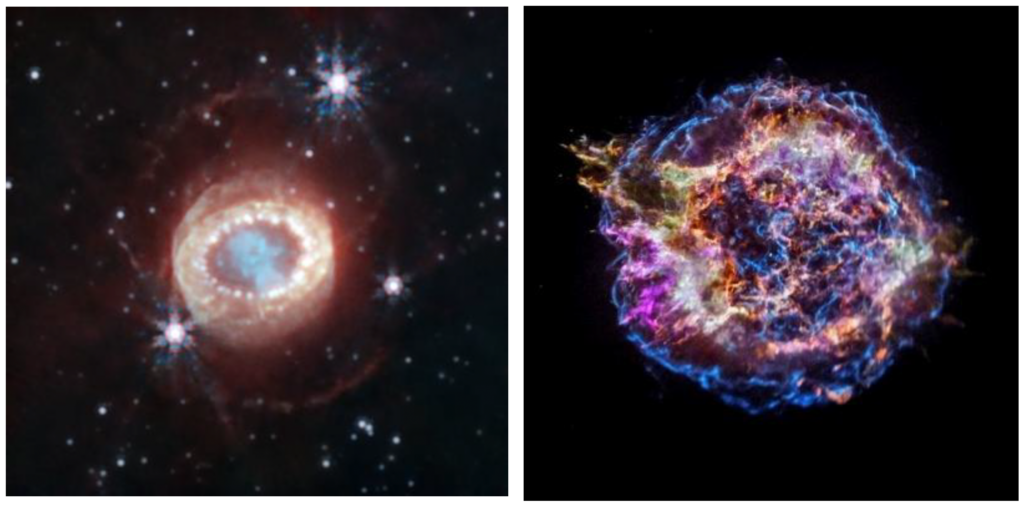
Searches for Continuous Gravitational Waves from Supernova Remnants in the first part of the LIGO-Virgo-KAGRA Fourth Observing runLIGO-Virgo-KAGRAGravitational wavescandidateRun 3: Check objections and missing evidence
Research questionCan waveform residuals in gravitational-wave data survive detector noise?Source basisSearches for Continuous Gravitational Waves from Supernova Remnants in the first part of the LIGO-Virgo-KAGRA Fourth Observing runSelected at29 Aug 2026, 03:00

Run history

Runs for this topic

3 runs recorded
Run 3: Check objections and missing evidencePROMISING

Can waveform residuals in gravitational-wave data survive detector noise?

The source provides a relevant merger dataset, but it does not directly test delayed ringdown residuals.

Summary

The source provides a relevant merger dataset, but it does not directly test delayed ringdown residuals.

Hypothesis

Can waveform residuals in gravitational-wave data survive detector noise?

Objection

The evidence may still be insufficient if it does not cleanly rule out alternative waveform explanations.

Next test

Which residual or echo analysis best separates detector noise from a genuine post-merger signal?

Why it matters
  • It shows whether the topic can be tested with real observations instead of speculative language.
  • It keeps the analysis focused on ringdown data, residuals, and clean upper bounds.
  • It helps distinguish observational constraints from theoretical storytelling.
Evidence used
  • LIGO A♯♯: Detector Design and Science Prospects Beyond A+ MPG.PuRe (Max Planck Society)

    It helps clarify whether continuous is supported and which evidence is still missing.

  • Analysis Of Black Hole Merger from Gravitational Wave Generation and Observation Darcy & Roy Press Co. Ltd.

    It helps clarify whether gravitational is supported and which evidence is still missing.

  • Multifractal Analysis of Pulsar Timing Residuals: Assessment of Gravitational Wave Detection American Astronomical Society

    It helps clarify whether gravitational is supported and which evidence is still missing.

Run 2: Extract the testable claimALIVE

Can waveform residuals in gravitational-wave data survive detector noise?

The source provides a relevant merger dataset, but it does not directly test delayed ringdown residuals.

Summary

The source provides a relevant merger dataset, but it does not directly test delayed ringdown residuals.

Hypothesis

Can waveform residuals in gravitational-wave data survive detector noise?

Objection

The hypothesis may still be too permissive unless the effect is separated from detector noise.

Next test

Which black-hole merger dataset provides the strongest constraints on delayed ringdown residuals?

Why it matters
  • It shows whether the topic can be tested with real observations instead of speculative language.
  • It keeps the analysis focused on ringdown data, residuals, and clean upper bounds.
  • It helps distinguish observational constraints from theoretical storytelling.
Evidence used
  • Analysis Of Black Hole Merger from Gravitational Wave Generation and Observation Darcy & Roy Press Co. Ltd.

    It keeps gravitational tied to one testable mechanism and a concrete observable.

  • Tests of Isospectrality of Quasinormal Mode with Gravitational Wave Observations Zenodo (CERN European Organization for Nuclear Research)

    It keeps gravitational tied to one testable mechanism and a concrete observable.

  • Plunge-merger-ringdown tests of general relativity with GW250114 American Physical Society (APS)

    It keeps gravitational tied to one testable mechanism and a concrete observable.

Run 1: Define the concrete questionALIVE

Can waveform residuals in gravitational-wave data survive detector noise?

The source provides a relevant merger dataset, but it does not directly test delayed ringdown residuals.

Summary

The source provides a relevant merger dataset, but it does not directly test delayed ringdown residuals.

Hypothesis

Can waveform residuals in gravitational-wave data survive detector noise?

Objection

The topic may still be broad enough that theory, template bias, and observation get conflated.

Next test

Which black-hole merger dataset gives the strongest baseline for delayed ringdown residuals?

Why it matters
  • It shows whether the topic can be tested with real observations instead of speculative language.
  • It keeps the analysis focused on ringdown data, residuals, and clean upper bounds.
  • It helps distinguish observational constraints from theoretical storytelling.
Evidence used
  • Realistic Time-Domain Synthesis of Gravitational-Wave Detector Glitches using Class-Conditional Derivative Generative Adversarial Networks arXiv astro-ph.IM

    It stays close to gravitational and supports the concrete question pass.

  • Analysis Of Black Hole Merger from Gravitational Wave Generation and Observation Darcy & Roy Press Co. Ltd.

    It stays close to gravitational and supports the concrete question pass.

  • Stellar black hole binaries from two common envelope evolution phases in triple stellar systems arXiv astro-ph.HE

    It stays close to gravitational and supports the concrete question pass.